Tuesday, November 22, 2011

Melting Pot: 19th Century Quilts

Early 19th century wholecloth chintz quilt
Last night, I did a lecture for the Westside Quilters Guild of Hillsboro, Oregon - another very fun group! The topic was "Melting Pot: Quilts from the 19th Century" and it was based on a self-published book I made for friends and family last Christmas. In the lecture, I gave an overview of quilt history from the earliest American wholecloth quilts, through the "best" quilts of the Civil War era, to the Victorian, Amish, and wool quilts of the late 19th century.

Nine-Patch Top, unknown maker, New England, c. 1830
The book was a survey of quilts from my collection and included various types of quilts. The lecture was more of a whirlwind tour of several important trends in quiltmaking during the 19th century. It was the first time I'd brought out the recently acquired wholecloth chintz quilt, which served as an example of type of quilt made from the 1760s through the second quarter of the 19th century. When discussing the quilt, I described some of the details and talked about imported fabrics and the advent of fabric production in America. By the 1840s, production was in full swing. The 1830s Nine-Patch top was made during the transitional period, when both imported and domestically produced fabrics were in use.

Detail: Album with Lyre, c. 1850, Mary Couchman Small, West Virginia
Block detail: MacMillan Family quilt, Monroe County, KY, 1868
The next two quilts represented the best of the "best" quilts from the Civil War era. First up was the Album with Lyre, which was hanging for the duration of the lecture. This quilt is among the finest examples of applique and quilting, and quilters always love getting up close to it. The MacMillan Family quilt, a variation of the pattern best known as New York Beauty, stirred a similar reaction from the audience. Both quilts are superlative examples of highly refined work, and both include solid, domestically produced fabrics.

Amish Nine-Patch crib quilt, c. 1900, Ohio
The last three quilts served as examples of the way quilters used color in late 19th century. Interestingly, the quilts also represented three different genres. I showed the Ohio-made Amish crib quilt from the Esprit Collection; the silk Diamonds quilt, a Victorian masterpiece related to the Crazy Quilt movement; and a wonderfully modern looking wool utility quilt. All three pieces displayed a darker palette with lush, earthy colors and rich jewel tones, and each quilt represented a specific type of fabric.

Block detail: utility quilt from the late 19th or early 20th century
Silk Diamonds, c. 1890 - I call it an "OCD" quilt
I always enjoy the reactions when people see these quilts for the first time. These reactions are probably similar to my own when I discover a great quilt. But beyond that, I love sharing what I've learned about quilts and quilt history. Many thanks to the Westside Quilters for inviting me to come lecture. I'm looking forward to visiting with the group again in the future! To check out the Westside Quilters Guild, click here.

Sunday, November 20, 2011

Five Polyester Crib Quilts

Five Polyester crib quilts arrived last week. Three are tied, and all are made from square patches of multicolor double-knit. So far, I've found ten crib or baby sized quilts from the 70s, and I'm wondering if they were more often made than crib quilts of other periods. Here are pictures of all five new ones.


I can only imagine these quilts are like a bad flashback for some quilters, who may remember working with double-knit polyester. Apparently, it wasn't the easiest material to use. It is stretchy and dense making it tricky to piece and difficult to quilt. That's why so many of them are tied.


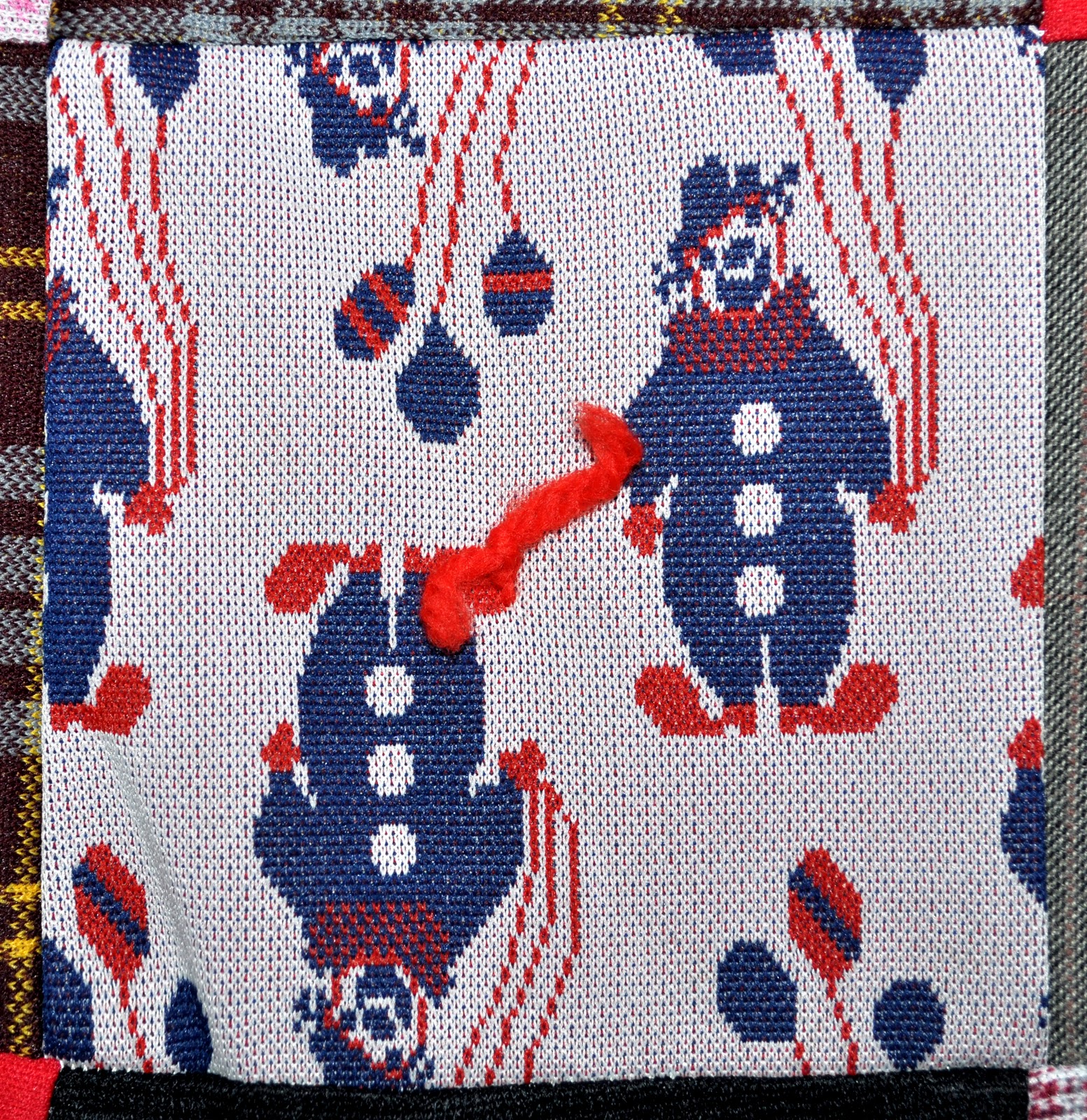
In a way, it's like a love hate relationship. Since I'm the guy who can't thread a needle, I think of these quilts more in terms of quilt history and art history, and they certainly hold a unique place in both fields of study. The 70s quilts intrigue me because of the way quilters were using color. Even the pastels were technicolor! The fabrics are also a lot of fun. Check out the detail of the double-knit clown fabric. Now, how can you look at that and not smile?

Saturday, November 19, 2011

What is a Masterpiece Quilt?

During my collecting journey, I gained an appreciation for
wool quilts. This one was made roughly 100 years ago
but there's something very modern about it.
Earlier today, I did a lecture for the Columbia River Gorge Quilters Guild in Hood River, Oregon, and the subject was masterpiece quilts. I've done variations on this lecture before, and today I focused on the idea of a masterpiece quilt and how my idea evolved.

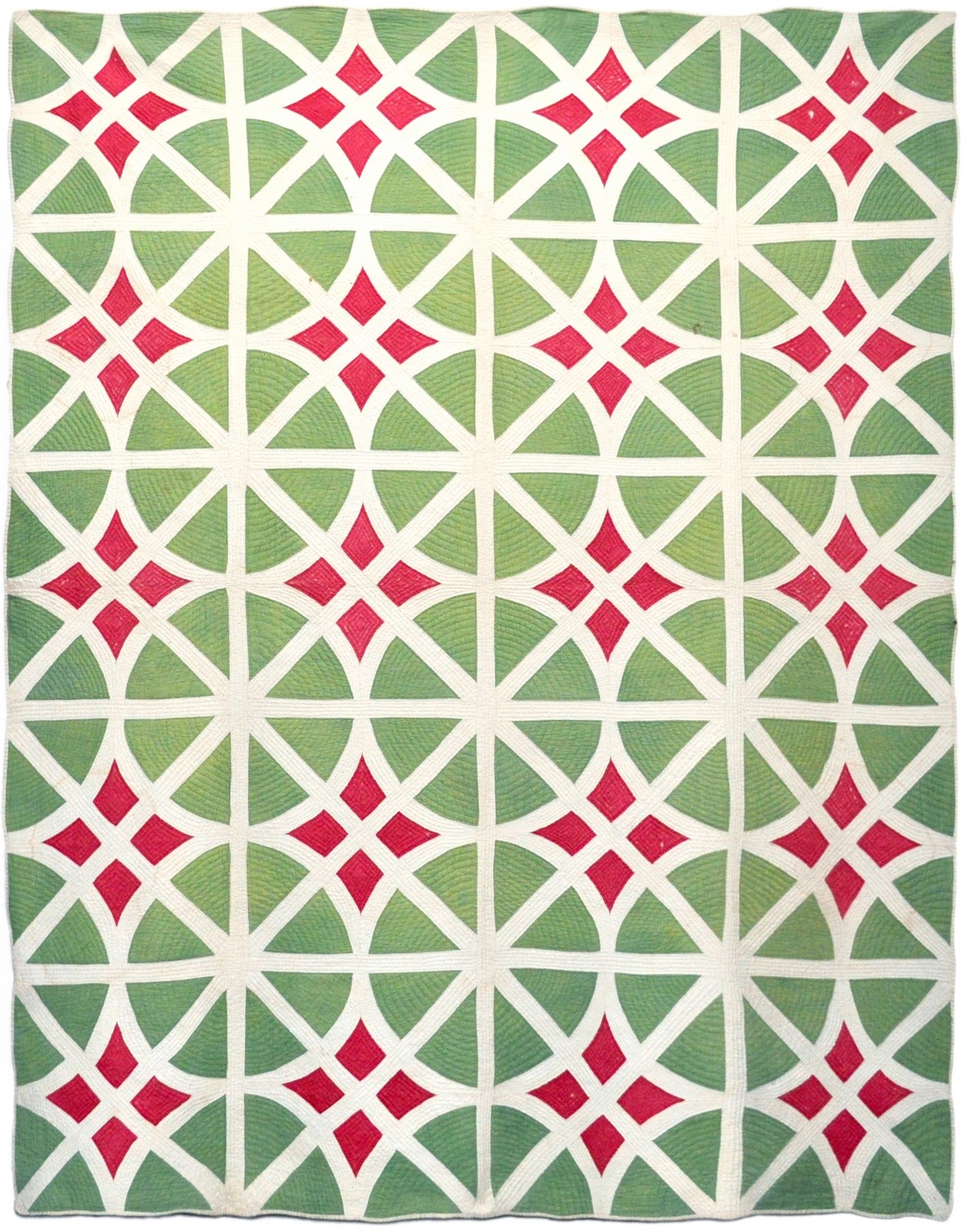
Block detail: cotton pieced quilt, unknown maker, c. 1850, Kentucky
In the program description, I asked, "What is a Masterpiece quilt? Masterpiece is a term that's usually associated with the fine arts, such as painting or sculpture. In the world of art, a masterpiece is a work of outstanding artistry, skill, or workmanship - an artist's best piece of work. People don't always think of quilts as works of art, but they are! 


Detail, Album quilt by Mary Couchman Small, West Virginia, c. 1850
We started with "best" quilts, the type of quilt collectors were collecting in the 80s, leading up to the time when I bought my first quilt in 1989. The level of skill, dense quilting, expert construction and detail left no doubt that these quilts were masterpieces. They spoke for themselves. Coincidentally, 1989 is the year  I saw my first quilt exhibit at the Philadelphia Museum of Art, featuring masterpiece Applique quilts from their permanent collection. 


Economy Patch, c. 1810, New England
Around 2001, wool utility quilts from the late 1800s and early 1900s started to catch my attention. Compared with the early-to-mid 19th century cotton quilts, the wool quilts were a whole different animal. The bold geometry, modern looking designs and often earthy combinations expanded my understanding of what a masterpiece quilt could be. More recently, I've developed a true love for the early 1800s wool quilts, which are often extraordinarily modern looking and visually sophisticated.


Block Detail: scrap quilt, c. 1970 - I call it "Wild Thing"
Toward the end of the lecture, I talked about one of the biggest revelations I had as a collector. In 2002, I saw The Quilts of Gee's Bend at the Whitney Museum in New York. It was just the second major quilt show I'd seen. The exhibition opened my eyes to all types of quilts, in any condition, and expanded my definition of a masterpiece quilt way beyond the wool utility quilts. It even led to what I'm collecting right now- primarily 1970s quilts. 


"Wild Thing" - I think I love you...
The last quilt I showed is a quilt I call "Wild Thing" - and it represents a point at which I was drawn to a quilt, but needed to figure out why. Sometimes the things that are most difficult to understand are most worth getting to know. 1970s quilts, many made of materials such as double knit polyester, are not widely appreciated or collected right now, but I believe some day they will be. 


So, it was a wonderful morning with a great group! And they put on a fantastic quilt show annually in September, so mark your calendars! To check out the Columbia River Gorge Quilters Guild, click here.

Friday, November 18, 2011

Portland Modern Quilt Guild - A Fun Group!

Night Flight, 1982, by Andrea Leong Scadden, aka Andrea Balosky
Yesterday I visited the Portland Modern Quilt Guild at the Pacific Northwest College of Art in Portland for an evening talk about masterpiece quilts. The room was packed, and what a fun group! There was lots of laughter, great questions, and the usual wide eyes, craned necks and audible gasps (I love those). The talk was an adaptation of my "Masterpiece Theatre" lecture, tailored to the guild.

Cross Roads, c. 1870, Texas
It was a whirlwind tour of my journey as a collector, and how my idea of a masterpiece quilt evolved over the years. The story started with the type of quilts that collectors were buying in the 1980s when I started collecting - "best" quilts - which are easily recognized by their wonderful design, great construction, and dense quilting.
Album with Lyre, 1850, Mary Couchman Small, West Virginia
From there, we went to Alabama when I showed Lucy Mingo's Bible Story quilt, made in 1979. Seeing the Gee's Bend exhibit in New York was a real turning point for me. I realized the definition of a masterpiece quilt was much more broad than my preconceived idea of the "best" quilt.

Bible Story by Lucy Mingo, Gee's Bend, Alabama, 1979
It was a big jump, but that's kind of how it happened for me. The first quilt exhibit I ever saw was Applique Quilts at the Philadelphia Museum of Art. The second quilt exhibit I saw was The Quilts of Gee's Bend. It was a lot to digest in a short time, but my art history background was a good foundation for understanding various styles of artistic expression. I loved the Gee's Bend quilts from the moment I first laid eyes on them!

Blue Skies and Green Tangent, 2011, by Andrea Balosky
I showed nine quilts in 45 minutes! Crazy, I know, but four were grouped together when I spoke about Andrea Balosky. Everyone seemed to have fun...I know I did! Thank you to the Portland Modern Quilt Guild for inviting me speak. I hope to return to the guild in the future to speak about more great quilts! To check out the Portland Modern Quilt Guild, click here.

Sunday, November 13, 2011

Thank You, Janis!

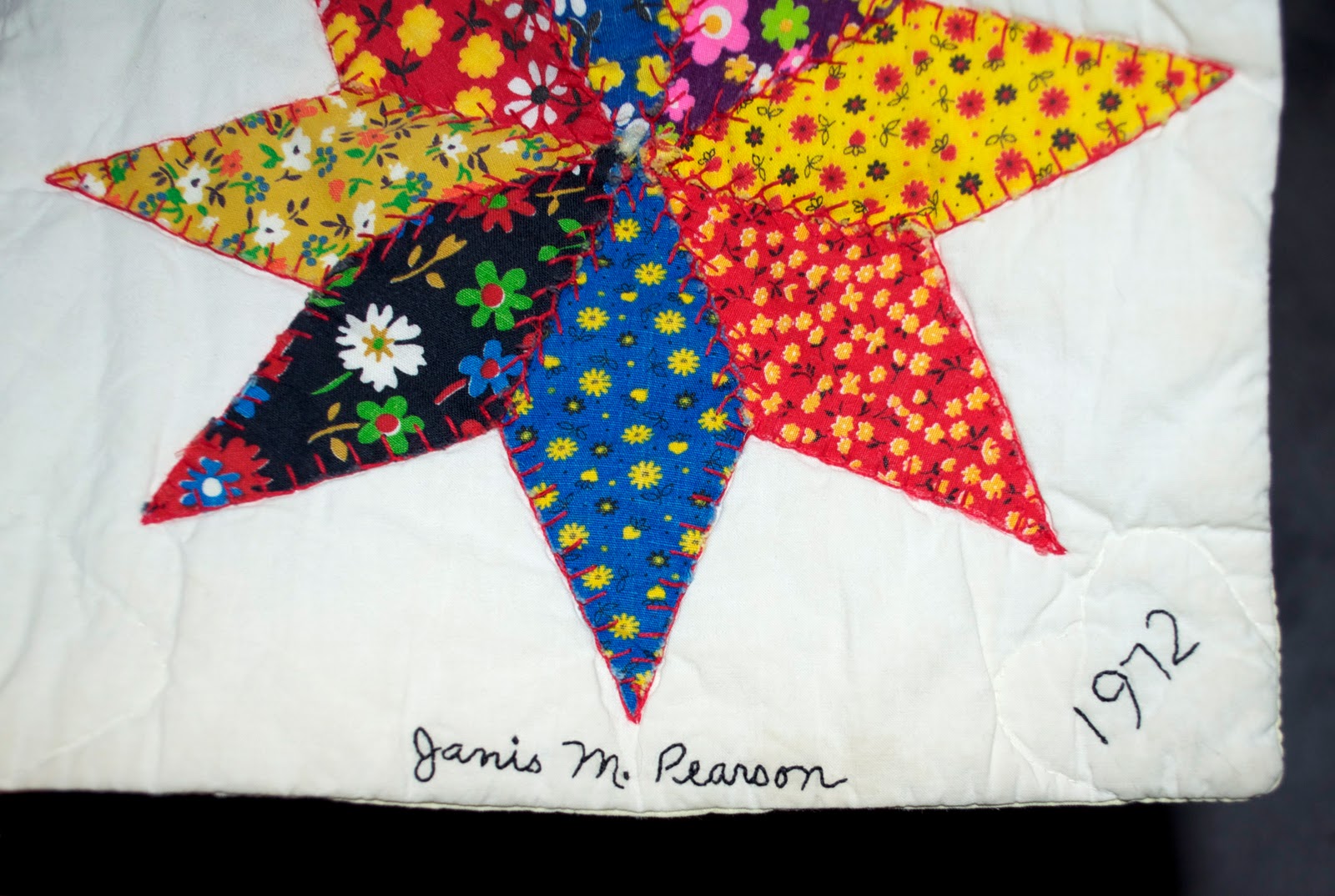
Stars, 1972, Janis Pearson, Oregon
Yesterday I received a generous gift from Janis Pearson during the meeting of the Columbia-Willamette Quilt Study Group at the Willamette Heritage Center Mission Mill Dye House. She gave me wonderful star quilt she made here in Oregon in 1972.


The quilt made with eight-pointed stars constructed of multicolored calico and floral print diamonds, appliqued to a white ground, and each star is outlined with decorative embroidery. It is amazing to see so many great calico prints after enjoying blogs about 70s calicos by Barbara Brackman on her Material Culture blog. The fabrics in this Star quilt are in perfect condition!


Janis Pearson, member of the Northwest Quilters and the Columbia-Willamette Quilt Study Group, is among the most talented hand quilters I've ever met. She recently donated a jaw-dropping whitework quilt to the Latimer Quilt and Textile Center, and the quilt is densely and decoratively quilted with tiny stitches. Compared to the whitework quilt, which was made several years later, the Star quilt is sparsely quilted. But the lovely four-leaf clovers are perfectly placed and very well done. Clearly, this quilt was made by a gifted quilter.


Of course, I'm elated to have a 1970s quilt made in Oregon by an Oregonian, particularly one I admire so much. This lively quilt has a sense of movement. The stars appear to dance and spin because of the way the colors are alternated. For me, the cherry on top of the sundae is the inscription on the lower left corner. It says Janis M. Pearson, 1972. It's a star among 70s quilts. Thank you, Janis!

Sunday, November 6, 2011

That 70s Surf, Part Two


In August, I did a blog entry called "That 70s Surf" with some favorite things from the 70s. Since I've been thinking about the 70s quilts a lot lately, I thought I'd do another 70s Surf blog with more things I remember all too well. Of course, there was the Pet Rock.


When I first saw this classic McDonald's Big Mac commercial I had to practice saying "Two all-beef patties, special sauce, lettuce, cheese, pickles, onions on a sesame seed bun." Even though I was just a kid, I wanted to be smarter than all the grown-ups in the commercial who couldn't get it right. Some people were just in a haze in the 70s, but nothing got past me. 


That's not to say I wasn't a total goofball. The classic "Manamanah" from Sesame Street was one of the songs I still, to this day, find myself singing. I was busy avoiding schoolwork, watching cartoons, and collecting Wacky Packs.


Without question, my favorite food in the 1970s was cereal. Any kind of cereal would do, if it was full of sugar, had cartoon characters and prizes or games. I ate Quisp, Count Chocula, Frankenberry, Boo Berry, King Vitamin, Super Sugar Crisp, Sugar Pops, Cocoa and Fruity Pebbles, Cookie Crisp, and my all-time favorite, Cap'n Crunch! There was regular Cap'n Crunch, Peanut Butter Crunch, Vanilla Crunch, and my absolute favorite, Cap'n Crunch with Crunchberries!!


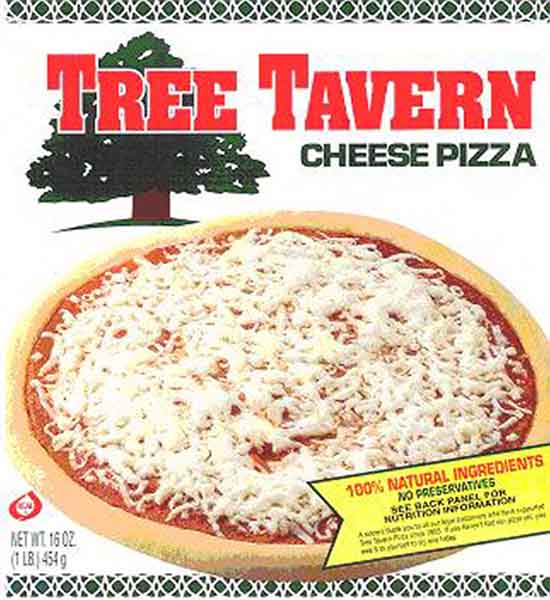
It wasn't until the late 70s that I learned about pizza parlors. Before that, Mom made homemade pizza sometimes but the rest of the time we had Tree Tavern frozen pizza.


The Tree Tavern started as a tavern and restaurant on Crosby Avenue in Paterson, New Jersey, and was a landmark location in Paterson through the 1950’s and 1960’s - right in the heart of the city. The Francia family presided over the restaurant from the very beginning. They froze the very first Tree Tavern Pizza in 1955 and was the first frozen pizza ever sold in a supermarket. I would still eat a Tree Tavern pizza, but in 1977 our family moved to south Jersey, closer to Philly than New York. That's where we discovered the local pizza parlor, Sal & Joes. It was similar to the one in the opening scene of Saturday Night Fever.


Toward the end of the 70s, disco wasn't as cool as it used to be, so I started listening to classic rock on WMMR in Philadelphia. That's when I discovered Pink Floyd. I don't think I was ever the same after that! Developing an appreciation for time and money was just the beginning.


Saturday, November 5, 2011

Willy's Quilt Buying Season

Bicentennial 13-star American Flag Quilt, purchased for $9.00.
Each year, I have a short, concentrated quilt buying season, which usually lasts from September through early to mid November. It's probably no coincidence that I find more great quilts when I've got a little extra spending money, but I still feel these months are very strong for fresh-to-the-market quilts. Things are starting to slow down a bit, but several new acquisitions have rolled in over the last few weeks. Some of these quilts will be available for sale when I launch my new web site, Willy Wonky Quilts. Others are going to be part my collection. Here are some of my favorites.

Monumental size polyester Crazy Quilt, c. 1975, Idaho
Kaleidoscopic polyester Sampler, c. 1970, New Mexico
Boldly designed wool quilt, c. 1910, Wisconsin
Scrappy Drunkard's Path quilt, c. 1910, Michigan
Wool tied comfort, c. 1920, Texas
1930s Broken Star quilt, Ohio
Snowball Variation / Octagons, c. 1970, Ohio