Thursday, June 13, 2013

before/after and in-between

screen shot: background partially removed using clone stamp

All of my quilt photography is done in house. It's kind of a hobby. I learned to use a camera at a young age and was taking pictures before learning how to read and write. In high school, I learned how to use the darkroom to develop black and white transparencies, negatives, and prints. In college, I studied photography and learned how to do most of the known photographic processes- dye-transfer, platinum printing, cyanotypes, hand-coated emulsions, tintypes, color transparencies and negatives, C-prints and Cibachromes. When the first digital cameras came out, I got one. When Photoshop came out, I taught myself how to use it.

It was really cool to land in the quilt world with this set of skills, because photography is a commodity. But I like taking a do-it-yourself approach to all media, from my web site to self-published books. Here are some pictures showing some of the steps from an original raw image to a usable quilt photo.

"before" photo set-up and "after" digital correction
The raw image shows the set-up, with straight-edge clipped to the bottom
edge of the quilt to help it hang straight. I use rubber-tipped A-clamps. 
Since I have daylight coming in from above, I use flash to balance the
light. I don't use this set-up for fragile or very old quilts.
After the pictures are uploaded to my computer, I open up the raw image
in Photoshop and begin the process of digitally correcting the image. To
cut out the background, I use a tool called "clone-stamp", which replaces
 one area with information from another area. In this case, it's plain white.
Usually, I'll clone stamp along the edge and box/select the leftover
then hit "delete" 
Clone-stamping a clamp out of the picture is a little trickier, but it's
the same idea. I'm just replacing the information with other info
found elsewhere in the image - easy peasy! Continue it around the whole 
perimeter and crop for a full view quilt on a plain white background.
clone stamped area along the lower edge, the gray is leftover
background, which will be removed with box/select/delete
sectioned-off pieces of remaining background to be cut out
Done! It's a little light along the top edge, and I can 
actually clone stamp a more defined binding edge if 
I want, but for now, it's OK
So, that's the skinny on the before/after and in-between. There are many other methods that work just as well, if not better. I do not recommend the photo set-up for very old or fragile quilts - too much stress on the fibers. Any way you do it, takes a couple hours per quilt from start to finish.

Wednesday, June 12, 2013

DWR, c. 1970, Texas

Wonky, wild and wonderful Double Wedding Ring
DWR = Double Wedding Ring, and this one is among the craziest you'll ever see. A majority of Double Wedding Ring quilts were done on solid backgrounds, and most of those were white. The fabrics are often organized in the pieced arcs, and cornerstones matched. This quilt throws all those rules out the window. It's wonky, wild, and wonderful!


Sunday, June 9, 2013

I'm a fan!


This outstanding 1970s fans quilt came from a seller in Texas, and has a dazzling combination of fabrics, mostly polyester knits. The fans blocks are set on point. They are done with improvisational piecing, and each one has a curved piece at the bottom using the same fabric in every block. The quilt is framed with a border of dark blue triangles.


Fun piece, very busy, not everyone's cup of tea, but it's a colorful, unusual rendition of a fan quilt. Could also look good with sashing if you like a slightly less chaotic look. I have a few great fan quilts, and they're all different. The fan block has a lot of creative potential. So I've got to say, I'm a fan!

Saturday, June 8, 2013

Miss America's Quilt

This wonderful pieced quilt from Kentucky once belonged to Miss America 1971, Phyllis George. It appeared in her book, "Living with Quilts" (1998) and was one of her favorites. She collected Kentucky folk art and had a special interest in the quilts when she was married to Governor John Brown. Miss America had good taste in quilts.


The quilt was made in the mid to late 19th century and is densely quilted. It includes two shades of solid green, a red print, and white, and it is all hand quilted. If you look at some of today's modern quilts, you may see similar ideas about large areas of solid neutrals defined by quilting, which this quilt has. The white area in the center of each block has small clamshell quilting and a series of arcs that appear to ripple outward from the pointed pieces. 

Friday, June 7, 2013

Alabama Beauty


This old pieced quilt just arrived from Alabama. I think it's from the 1860s or 1870s, maybe c. 1865- and there's that asymmetry again! Hard to see on a bed, but easily seen in the full view. The quilt includes full blocks on three sides and half blocks on the left. There are no cornerstones.


I found it on eBay.

Tuesday, June 4, 2013

documenting quilts


Big project! Documenting quilts. I've got about 250 to 300 quilts at this time, and the first task is to document the New York Beauties because they will soon go to San Jose for my exhibit at the San Jose Museum of Quilts & Textiles.


Documenting a quilt doesn't have to be too complicated. You need to fill out forms with history and physical description - involves a bit of measuring - and you need pictures. I'm lucky, because I have most of the pictures already. For most people, that's the hard part. For me, it's the fun part.
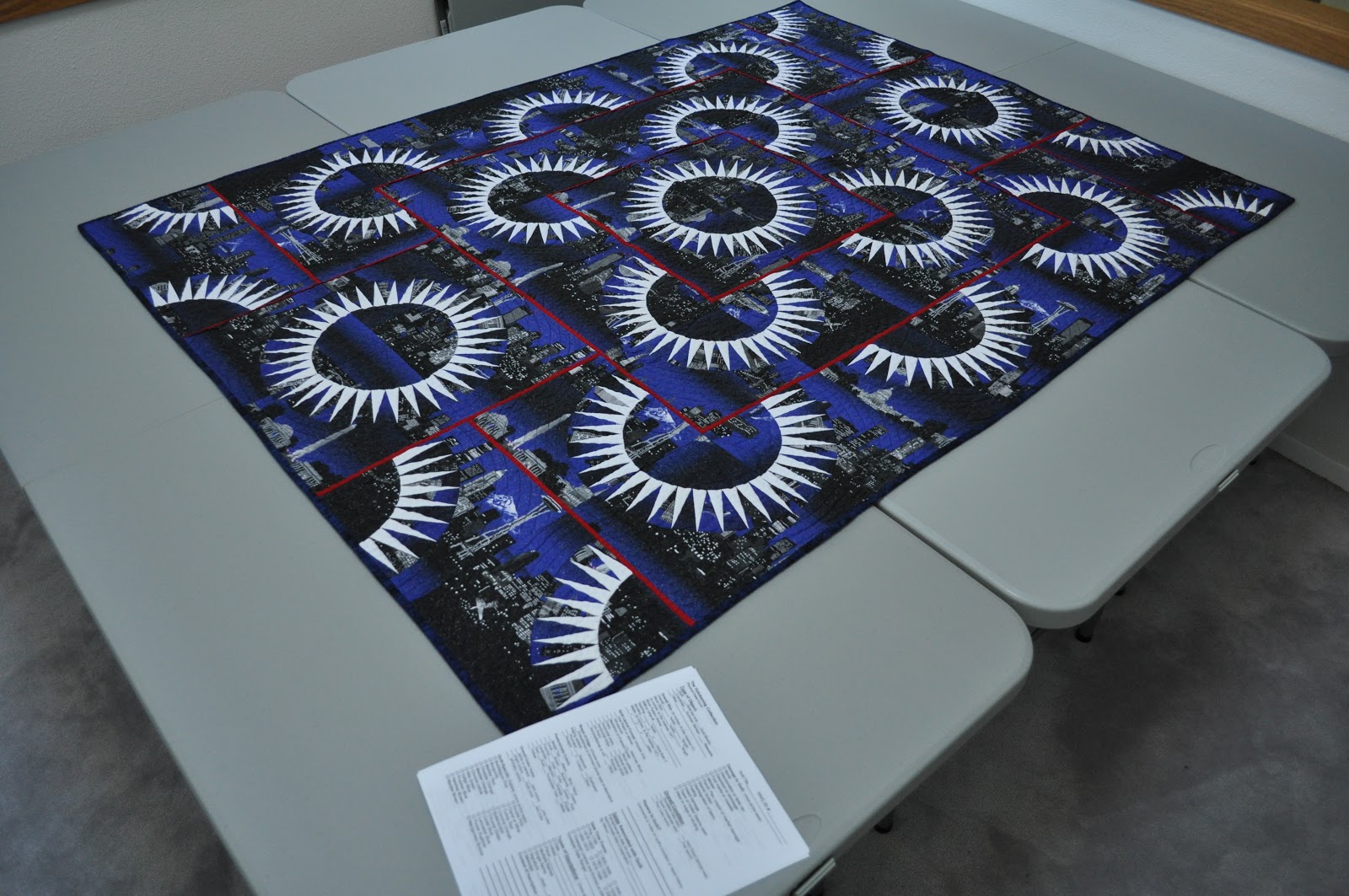
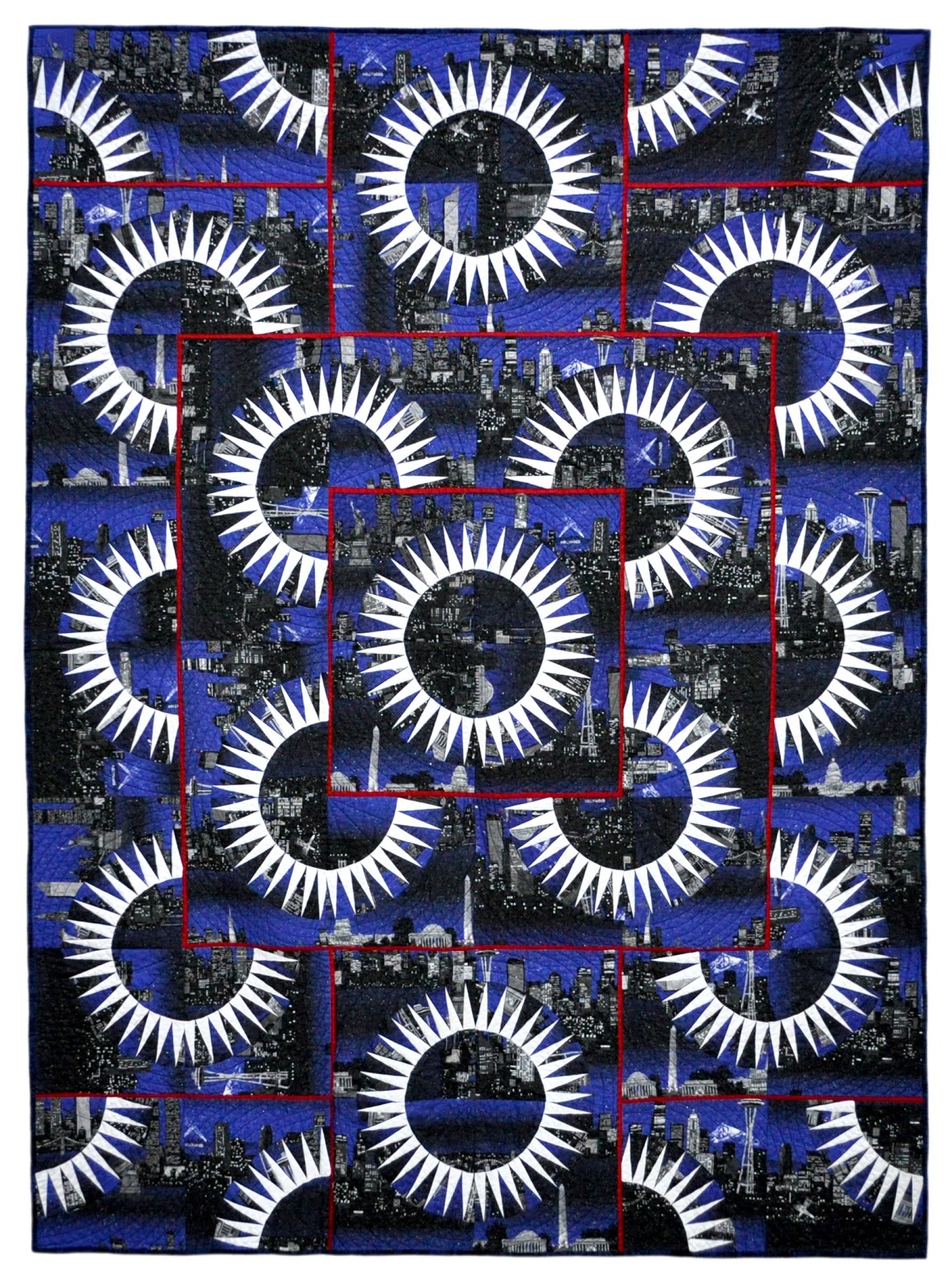
“Great Cities²” 2000-2010 by Christine Wrobel
Once I have more quilts documented, it will be time to start the process of getting them on to the Quilt Index, where they will then be available for researchers and anyone else who has an interest in quilts. The Quilt Index is a large database of quilts from statewide documentation projects, public and private collections. If you haven't seen the Quilt Index, it's definitely worth bookmarking. Check it out - click here!

Saturday, June 1, 2013

Going to Tacoma


One of my favorite songs by Smokey Robinson & the Miracles is "Going to a Go Go" - and that's the song that's going through my head right now, except I changed the words. I'm going to Tacoma! My quilt, "Wild Eyed Susans" was accepted in to the 2013 Pacific West Quilt Show.


How did that happen? I wasn't supposed to get in to that show. People like Sherry Reynolds, Kathy McNeil, Barbara Shapel, and Sharon Schamber get in to that show- not me. I'm not in their league. It was just a silly, spur-of-the-moment idea to enter, late one night after having one too many beers. "Congratulations" was not supposed to be the first word in the e-mail I received. But I'm going to Tacoma.


Later in the day, I saw the list. One of four men in the whole show? Nuh-uh!! That's cool. Also, I only saw one other person whose name I recognize from my guild - Jo Barry (you go, girl!). There were just a few familiar names - not because they're unknown quilters, but because I'm really clueless. I could be talking to the most well known quilters in the world and wouldn't know it. All new to me. I've only been making quilts for a year, and have never entered a "judged" show before. But I'm Going to Tacoma!