Saturday, March 4, 2017

picked over and restocked!


On my way to the Antiques Expo today, I thought I'd swing by Antique Alley to make sure everything was OK with my case. My expectations of selling anything weren't too high. I thought maybe one or two things would be gone, barely enough to notice. I was wrong about that.


I got to the shop just when it opened, and my case looked like I was halfway moved out. It was really picked over! And silly me, I didn't bring along any more things to fill it back up. So I went back home, priced and boxed more stuff, went back and filled the case. This time I think I got more stuff in it. Some cool goodies.


While I was loading up the case, a staff member handed me the receipts for the week.


The total was $182.60. That was unexpected! The monthly rent for the case is $75, and I was just hoping to make that in a month. Guess I should adjust my expectations a bit, and maybe it's OK to keep hunting for bargains at thrift stores. I never made it to the Antiques Expo, but there's always tomorrow!

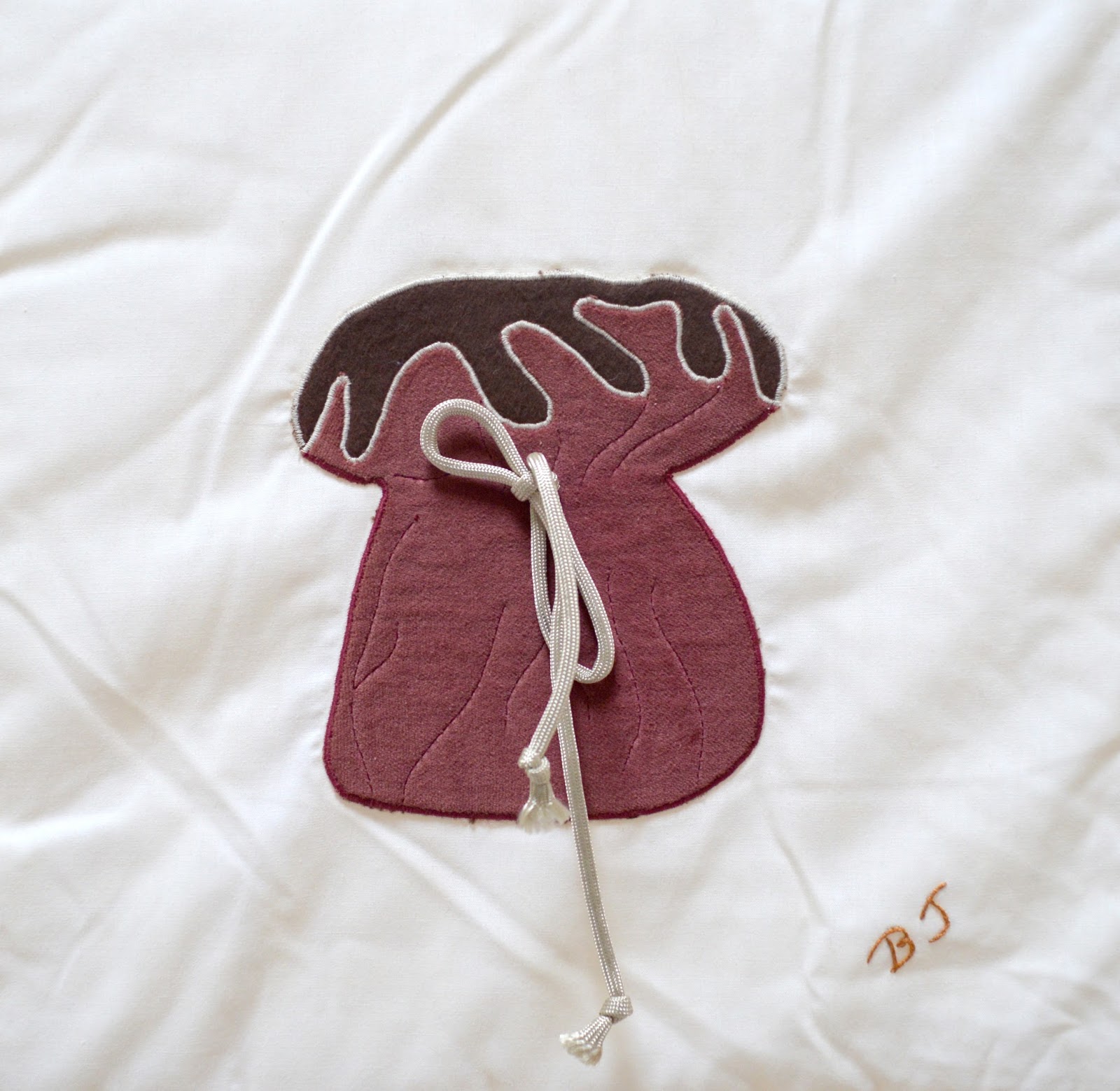
Prudence Louise Ross's P.E.O. Sisterhood Quilt, Keene, New Hampshire 1973

As a retired magazine editor whose specialty was story development, I know a good story when I see it. We are not talking about fiction, though. The truth is much better, especially when it comes to the story of Prudence Louise Ross and her quilt.


Prue loved to ski and was an instructor with the Ford Sayre Ski Program and at Whaleback Ski Club's annual ski week. 


She loved books, flowers, the Red Sox, especially Ted Williams, and traveling with her family. She had an abiding interest in politics and was devoted to the Stars and Stripes.


She was an accomplished pianist. In addition to giving private piano lessons, she was well known for her volunteer work with the Lebanon School System music programs. She spent countless hours playing piano for the chorus, band concerts and school plays.


Prudence "Prue" Louise Ross was born in Brockton, Mass., March 16, 1933, to Harold E. and Erma L. (Stanley) Luneburg. She grew up in Whitman, Massachusetts, graduated from Whitman High School in 1950 and Smith College in Northampton, Massachusetts, with a degree in economics. She married Donald E. Ross on June 18, 1955. Her greatest passion was for family and friends. 


A few of her favorite things included the Lebanon School Board, the PTA, Rainbow Girls, and Girl Scouts. 


Prue was a founding member of Chapter H of the P.E.O. Sisterhood in New Hampshire. P.E.O. stands for Philanthropic Educational Organization, and the P.E.O. Sisterhood is an international women's organization of about 250,000 members with a primary focus on providing educational opportunities for female students worldwide. 


The Sisterhood is organized with chapters throughout the United States and Canada, headquartered in Des Moines, Iowa.


The official flower of the P.E.O. Sisterhood is the Marguerite Daisy. As of 2014, more than $235 million had been awarded to over 90,000 women from the organization's six educational grants, loans, awards, and stewardship of Cottey College. 


P.E.O. has awarded Educational Loan Fund (ELF) dollars totaling more than $143.6 million, International Peace Scholarships (IPS) are more than $29 million, and Program for Continuing Education (PCE) grants are more than $43 million. 


P.E.O. Scholar Awards (PSA) are more than $16 million and P.E.O. STAR Scholarships (STAR) are more than $2.6 million. In addition, 8,500 women have graduated from Cottey College.


Prue was the first Past President of the Northeast District Chapter to serve on an International Board. She was dearly loved. Members of Chapter H made this quilt for her. 


She worked tirelessly to empower women through education. It is no surprise she was dearly loved.


I found enough information about Prue Ross to write a research paper. Then, a sad thought occurred to me. She couldn't possibly be alive if her quilt was up for auction on eBay. Deeply personal, it was the kind of quilt you would never let go.


Prudence Louise Ross passed away on June 14, 2009, at her home in Newbury, New Hampshire. Her quilt appeared on eBay just last week. When I saw it, I thought I was looking at something very special, but I had no idea. Prue was an extraordinary person. I am delighted to know her through her quilt, and even more delighted to share her story. For more information about the P.E.O Sisterhood, please visit the P.E.O International website - click here.

Friday, March 3, 2017

Bicentennial quilt from Iowa

Bicentennial Quilt, cotton/synthetic blend, unknown maker, Iowa, c. 1976, 63" x 78"
Confession: I completely am enthralled with Bicentennial quilts. It's hard not to love them. They capture the spirit of patriotism, optimism and new beginnings. In the 1970s, millions of people learned to quilt. The popular pasttime from the 30s and 40s practically skipped a generation from WWII through the Vietnam War, but the Bicentennial gave Americans inspiration to explore the past, and quiltmaking was part of it. What they didn't realize was how their activities would be the foundation of a multibillion dollar industry in the 21st century.


The quilt features an eagle in the center, surrounded by fields of red and blue stars above and below. There are 50 stars total. The eagle's head is facing to its right (the viewer's left), toward the olive branch in its talons, with arrows in the left talons (the viewer's right). I went looking for information about the head position of the eagle, and found there was a myth about its head changing position during times of war. In fact, there was one change made around World War II to its current position, but the head position does not change back and forth during times of war and peace.


The applique was done with hand buttonhole or blanket stitch embroidery in white, and the whole quilt is hand quilted. If you look closely, things are a bit off-center and catawonky, but I love that. Rudimentary technique is a hallmark of the period, just as flowing free motion quilting or graphic linear quilting are hallmarks of today's quilts. One of my favorite quirky details is the use of pink fabric at the top and bottom in the fields of stars. At first, it almost looks like color bleed, and it makes you do a double take. Very cool!


I was ten years old when the Bicentennial took place. It's hard to believe we will soon have another centennial event, the Sestercentennial, America's 250th birthday in 2026. I'll bring the quilts.

Thursday, March 2, 2017

"Don't believe me just watch"


Six and a half years ago, I started collecting and sharing the quilts of the 1970s. Soon after, I realized a lot of the quilts of the period were made of polyester double knit. It seemed like an obstacle. To simply utter the words "polyester" and "quilt" in the same sentence usually resulted in snarky comments and dookie face. There were some folks who really didn't like polyester...but were they really looking?


I had a feeling there was something special about these quilts, but faced the prevailing attitude that collecting them would never amount to much. Rather than following the strong advice of the quilt historians to not bother with polyester quilts, I decided to dive in.

SaveSave

"Don't believe me just watch." That's how I feel today. A few months from now I will be exhibiting polyester quilts at the International Quilt Study Center Museum in Lincoln, Nebraska-- a premiere venue for exhibiting quilts. If the quilts could talk, they might express sentiments similar to Sally Field in her 1985 Oscar acceptance speech.


The exhibition is scheduled for May 26 to August 27. Here's the description on the IQSCM website:

"In the era of flower-power and “Mod” fashion, polyester double-knit reigned as the ubiquitous and indestructible fabric of the age. Today it is often criticized as cheap, scratchy and horribly outdated, but in a pocket of time at the beginning of the 1970s quilt revival when good quality quilting cottons were not available, quiltmakers used what they had. These innovative and shockingly vibrant pieces from the Bill Volckening Collection occupy an important space in American quiltmaking tradition."

"Don't believe me just watch." 

Stay tuned for more details. 

Wednesday, March 1, 2017

King George & cornbread


Another Bicentennial quilt just arrived, and this quirky creation from an eBay seller in Payson, Arizona has everything from King George III to cornbread. What a riot!

Bicentennial 16-Patch, La Canada High School, 1976, 52" x 77"
Of course, one of the things I love most about the quilts of the 1970s is the sense of humor.


The quilt also has information, inscriptions and dates.


The Bicentennial inspired a lot of Americans to try quiltmaking, even school children. I love the whimsical quality of art created by young people.


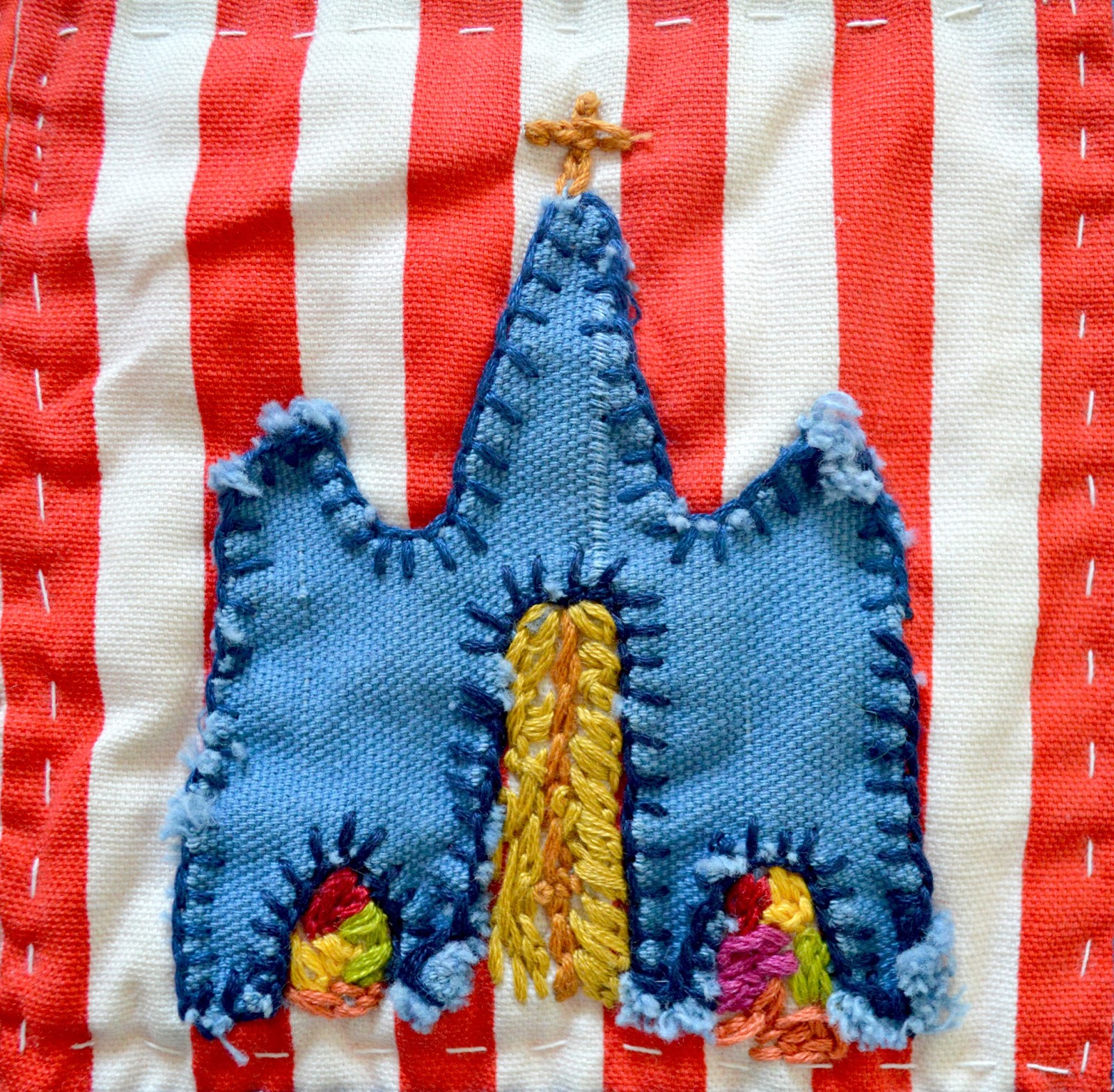
The quilt has many of the important things in the lives of Americans: a church, the American Eagle, a guitar, blue jeans and a burger.


Some of the images are hard to see from a distance. You have to get up close and look, and I love that about this quilt. And it's got King George and cornbread. A charmer!