Wednesday, December 19, 2012

"Thankful"

"Thankful"
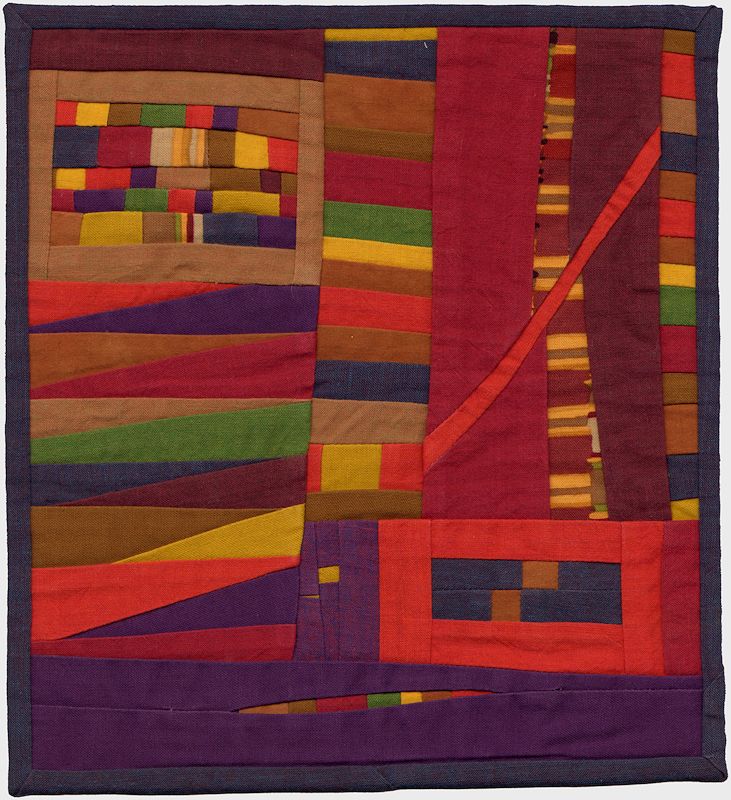
I happened to be looking at the Alzheimer's Art Quilt Initiative (AAQI) web site last week, and discovered a gorgeous little quilt by Kristin Shields of Bend, Oregon. The quilt is called "Thankful" and is AAQI quilt #12,678. Earlier this year, I bought another one of Kristin's quilts, "Shhh...", the 10,000th quilt received by AAQI.

"Shhh..." by Kristin Shields, AAQI #10,000
(left to right) Nyima Lhamo and Kristin Shields in Sisters
She and I met for the first time at the Sisters Outdoor Quilt Show, in a little coffee shop, along with Nyima Lhamo, Lori DeJarnatt, and my mom. Later, we were both part of the Gwen Marston and Sue Spargo Folk Art Quilting Retreat and Gwen's Liberated Medallion workshop the day before. That's where Kristin came up with "Thankful" - I loved it then, and love it even more now.


When I flipped the quilt over to look at the back, there was a surprise, and it made me smile. There was a big bird perched on a branch, with the inscription in the center with the title, her name, location and year. In her artist statement, Kristin said, "This is a sketch that I made during a class with Gwen Marston. I will always be thankful to Gwen for pioneering the concept of Liberated Quilting." I, too, am thankful.

For more information about the Alzheimer's Art Quilt Initiative, click here.

Tuesday, December 18, 2012

Why Quilts Matter December Guest Blog


The December Why Quilts Matter guest blog is now posted, and the topic of the month is an important discovery-- the Achsah Goodwin Wilkins applique counterpane. I wrote about some of the history and how I acquired it, among other things. This discovery was the topic of much discussion over the last three months. It led us to rediscover the stories of Achsah Goodwin Wilkins, and Dr. William Rush Dunton, who documented many examples of Wilkins' chintz medallions more than 100 years after they were made.


Over nine feet long and ten feet wide, this fancy, single-layer spread is a monumental floral kaleidoscope made of the most precious materials of the period. That alone makes it a rare object. To read more about this important discovery in the December Why Quilts Matter guest blog, click here.

Friday, December 14, 2012

The Willow Tree: what does it mean?


I've had a migraine all day, and what a terrible day to be horizontal on the couch with the television going. The news today was very grim, unspeakable, and it caused me to stop and reflect on the various meanings of the willow tree. In some ways, it is the ultimate symbol of grief, but it's really much more than that.

Around the time the Willow Tree Quilt would have been made, in the late 18th or early 19th century, the motif was most likely a symbol of sadness and mourning. It was a "weeping" willow. In other cultures, it was more of a hopeful symbol, representing fertility, new life, and rapid growth. As divergent as these meanings may appear, there is something that connects them. It is the whole process of life and death, and with the death of a loved one, first we weep, then we heal and grow.


The importance of the willow tree as an icon is matched by its medical significance. The bark of the willow tree is a source of acetylsalicylic acid, or aspirin - and I've had a couple of those today. This blog post is really just the tip of the iceberg, and there is much more research to do on the iconography of the willow tree. For all the various things it represents, it seems like an appropriate symbol for today.

The Purple Quilt

"The Purple Quilt" c. 1970, Texas, 81 & 1/2" x 64"
So, I can't look at this quilt without having the "Purple People Eater" song go through my head.


The quilt is a simple one-patch, or four-patch, depending on how you look at it. It is all double-knit polyester, tied, and done in a style that almost suggests a medallion. Whether it's a one-patch or four-patch, the overall design is symmetrical, and the symmetry jumps out because of the dark, floral print fabric patches.


Some amazing fabrics! Textured, woven, and printed designs. That's the interesting thing about doble-knit. It's got print, woven, and textured designs. So, even people who don't like it should respect it. A truly versatile fabric, even if it's the not the "fabric of our life".

Thursday, December 13, 2012

New Pictures of an Old Favorite

I'm going through quilts, trying to get better pictures of some of the old ones I've almost forgotten. If I don't have a decent picture, I sometimes forget I have the quilt, and this astounding Barn Raising Log Cabin is one of those.


It is made of silk, c. 1940. I bought it from a seller in Ohio back in 2005, and a couple years later it was displayed as part of the Tokyo International Great Quilt Festival as part of Shelly Zegart's Log Cabin exhibit. Wish I could've gone. It must be quite a spectacle to see the Tokyo Dome full of quilts with endless lines of people waiting to get in to see them.


It's a really interesting quilt, made during a period when there weren't as many silk quilts being made as in the earlier, Victorian period. It was actually made in the heyday of feed sacks and mass produced cotton calicoes, and that makes it especially curious. I really have to ask myself, "Who would've made such a quilt?"


The thing I like most about this quilt is the optical illusion of translucent layers, which is largely created using print fabrics with the same predominate colors as the adjacent solids. The effect is boosted by the luminous silk. It's one thing when you see it up close, and a whole other thing when you step back and see the whole image. I think the maker was very clever, and had an incredible eye for color. It was worth the time to pull it out and get a better picture of it.

Wednesday, December 12, 2012

Nice Surprise


I was reading a random something on Facebook yesterday, and came across a comment from a familiar name with a very familiar looking avatar image. It was Nancy Tanguay of Connecticut, maker of the wonderful New York Beauty I bought from her through Etsy a couple years ago. There was something different about the picture, though. I clicked it and realized it was a picture of the unquilted top, something I'd never seen before. What a nice surprise!

Here's what the completed quilt looks like.


It's interesting that the finished quilt, which is sleeved and labeled on the back, is rotated 45 degrees from its position in the picture of the top. I like it both ways! Thank you to Nancy for giving me permission to post the picture of the quilt top. I am delighted to see the picture of it in progress. 

"C is for Curiosity"

Curiosity Mars exploration vehicle (NASA photo)
What a clever person Andrea Balosky is. If you look at her quilts and think they're just visual eye candy, you'd be sadly mistaken. The quilts are always about something. That's what makes her an artist.  So, you can only imagine how pleased I was to learn that her quilt "C is for Curiosity" was an homage to the Curiosity Mars exploration vehicle. How cool is that?

"C is for Curiosity" 2012 by Andrea Balosky